External dacryocystorhinostomy outcomes in patients with a history of dacryocystitis
Article Sidebar
Main Article Content
Abstract
Purpose
To investigate nonidiopathic causes of external dacryocystorhinostomy (DCR) failure.
Methods
The medical records of all patients with acute or chronic dacryocystitis who underwent external dacryocystorhinostomy performed by the senior author over a 5-year period were retrospectively reviewed, with attention to microbiology, pathology, and associated medical and history.
Results
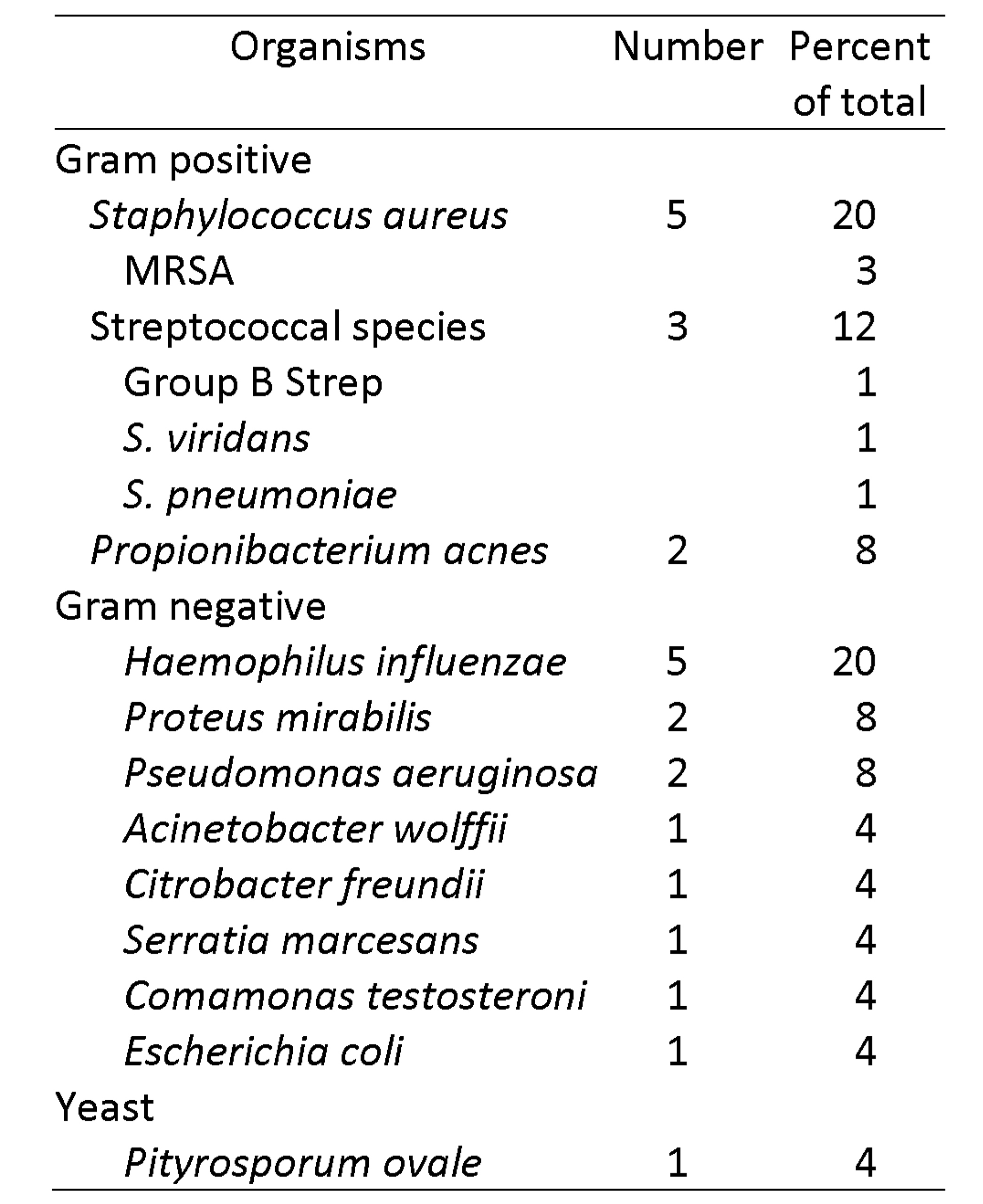
A total of 52 lacrimal systems of 49 patients were included, with a minimum follow-up of 2 months (average, 15.5 months). Surgical success was achieved in 42 systems (87%). Of 7 failures, 6 had a condition potentially associated with an increased risk of failure, including MRSA infection, Gram-negative infection, rhinosinusitis, lymphoma, inflammatory bowel disease, and early loss of lacrimal stents.
Conclusions
External DCR is a successful procedure for the treatment of nasolacrimal obstruction associated with dacryocystitis. Various factors may affect surgical success, and awareness of these factors may enable better patient counseling and surgical planning.
Downloads
Article Details

This work is licensed under a Creative Commons Attribution-NonCommercial-NoDerivatives 4.0 International License.