Effects of augmented tenotomy and reattachment in the infantile nystagmus syndrome
Article Sidebar
Main Article Content
Abstract
Purpose
To test the hypothesis that augmented tenotomy and reattachment surgery (AT-R), which involves placing an additional suture in each distal tendon during the 4-muscle tenotomy and reattachment (T-R) or other infantile nystagmus syndrome (INS) procedures, could increase the beneficial effects of many types of extraocular muscle (EOM) surgery to treat INS.
Methods
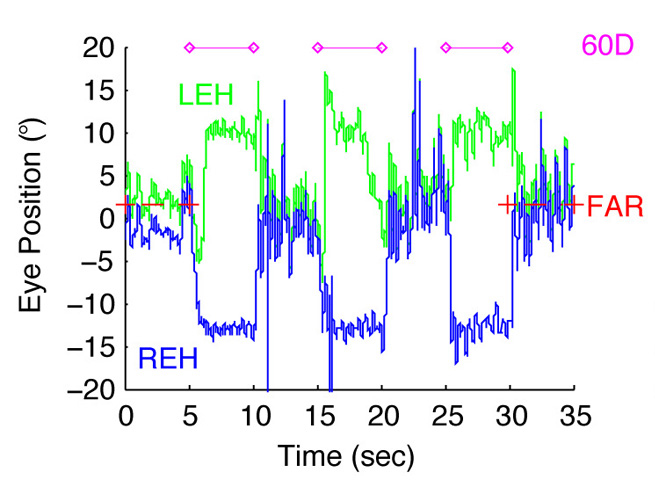
Both infrared reflection and high-speed digital video systems were used to record the eye movements in 4 patients with INS before and after AT-R surgery. Data were analyzed using the eXpanded Nystagmus Acuity Function (NAFX) that is part of the OMtools software.
Results
Placement of the augmentation suture did not interfere with Kestenbaum, Anderson, bilateral medial rectus muscle recession, or T-R surgeries. The therapeutic effects of AT-R were similar to but not equal to those from the traditional single-suture surgeries (ie, broadening longest foveation domain [LFD] but no improvement of NAFX peak). The average of the NAFX percent improvements after AT-R was within 31% of those estimated from NAFX values before T-R; the average of the percent broadenings of the LFD values after AT-R was within 16%.
Conclusions
The AT-R does not improve the foveation quality in INS above the traditional T-R surgery. It is not improved by an additional suture; indeed, some improvements may be diminished by the added suture. The hypothesized augmented-tendon suture technique (sans tenotomy) has been modified and remains to be tested.
Downloads
Article Details

This work is licensed under a Creative Commons Attribution-NonCommercial-NoDerivatives 4.0 International License.